Common Problems with Stick Vacuum Cleaners for Professional Cleaners
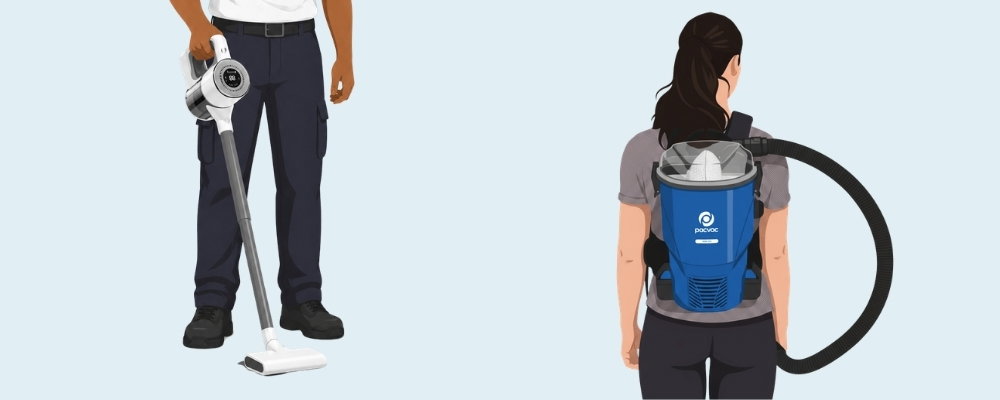
The Operational Reality of Portable Suction
In the modern Australian facility management sector, the allure of the stick vacuum cleaner is undeniable. Its slim profile and cordless nature suggest a level of agility that traditional corded units simply cannot match. For the strategic leader looking to streamline cleaning protocols, deploying a fleet of these units seems like a forward thinking move toward a more flexible workforce. However, as many operational heads have discovered, the transition from a heavy-duty backpack vacuum cleaner to a lightweight portable unit often reveals a series of systemic performance issues that can compromise the cleanliness of a high-end commercial site.
The primary challenge lies in the fact that most handheld technology is engineered for the domestic "burst" clean rather than the unrelenting rigours of a professional eight hour shift. When a stick vacuum cleaner is pushed beyond its intended household duty cycle, the frequency of mechanical and electrical hurdles increases exponentially. Understanding these common problems is the first step in recognising why a professional backpack vacuum cleaner remains the gold standard for deep, reliable maintenance in the commercial arena.
Thermal Stress and Airflow Obstructions
Perhaps the most frequent issue encountered with a stick vacuum cleaner is a sudden and frustrating loss of suction. Because these units rely on high velocity air moving through a very narrow internal diameter, even the smallest piece of debris can create a significant bottleneck. Unlike the robust intake of a backpack vacuum cleaner, which is designed to handle varied commercial waste, the airway of a portable unit is easily compromised by everything from stray staples to heavy carpet fibres.
When the airflow is restricted, the digital motor is forced to work at a much higher RPM to maintain lift. This creates immense thermal stress within the compact housing of the stick vacuum cleaner. In a professional setting where the machine is expected to run continuously, this heat has nowhere to escape, leading to "thermal cut-out" events where the machine shuts down entirely to protect its circuitry. This downtime is a direct hit to your team's productivity. By contrast, a backpack vacuum cleaner is engineered with sophisticated cooling bypass systems that allow it to run all day without the risk of overheating, ensuring that your scheduled cleaning windows are never missed due to equipment fatigue.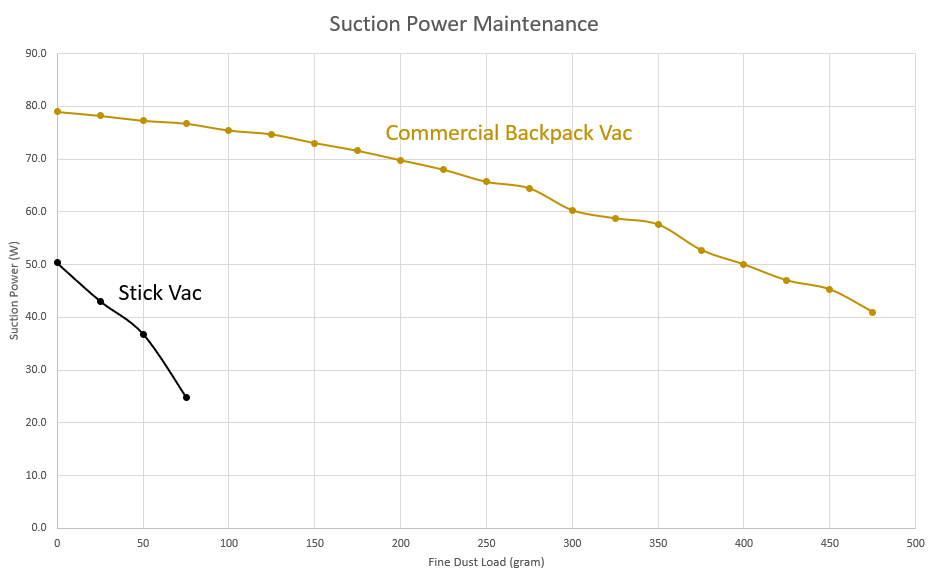
Battery Degradation and the Power Ceiling
For any cordless stick vacuum cleaner, the lithium-ion battery is the single most expensive and vulnerable component. In the demanding Australian climate, these batteries are often subjected to rapid discharge and recharge cycles that can quickly lead to capacity fade. An area that can be of concern is that a machine that once provided forty minutes of run time is suddenly struggling to reach the twenty-minute mark. This "range anxiety" forces a hurried result, leading to substandard results and missed spots in high traffic zones.
Furthermore, the power output of a stick vacuum is inextricably linked to its battery health. As the charge drops, many units experience a corresponding drop in suction, a phenomenon known as "voltage sag." This means the quality of the clean at the end of a corridor is tangibly worse than at the beginning. A professional backpack vacuum cleaner, whether corded or equipped with high capacity commercial batteries, is designed to provide a flat power curve. It delivers 100% performance until the task is complete. When you consider the labour costs associated with a cleaner waiting for a stick vacuum cleaner to recharge, the perceived convenience of the portable unit quickly evaporates in favour of the consistent uptime of a professional backpack.
The Maintenance Burden of Domestic Design
Maintenance is where the true cost of a stick vacuum fleet becomes apparent to business leaders. Domestic grade floor tools are often made of lightweight plastics that lack the durability required to survive the daily knocks and bumps of a commercial environment. Brush bars frequently seize when hair and carpet fibres wrap around the bearings, a problem that requires delicate and time-consuming manual intervention to resolve. If these tangles are not cleared daily, the extra friction can permanently damage the drive motor of the stick vacuum cleaner, leading to an unserviceable unit.
In a professional context, equipment should be an enabler, not a burden. A backpack vacuum cleaner is built with serviceability in mind, featuring reinforced components and easy access brush rolls that can be cleared in seconds. The high volume dust capacity of a professional backpack also means fewer trips to the bin, whereas the tiny canisters on a stick vacuum require constant emptying, which releases fine dust back into the air and slows down the operator. For an leader focused on long term ROI, the constant need for "gentle handling" of a stick vacuum cleaner represents a significant operational risk.
Investing in Industrial Integrity
Ultimately, the goal of any facility leader is to provide a clean, healthy, and professional environment for their stakeholders. While a stick vacuum may have a place for quick, reactive spot cleans in a small retail boutique, it cannot replace the deep cleaning power and ergonomic efficiency of a backpack vacuum cleaner. Relying on consumer level technology for commercial level tasks is a false economy that leads to higher asset turnover and lower hygiene standards.
At Pacvac, we believe in empowering your team with tools that are fit for purpose. By understanding the limitations and common pitfalls of the stick vacuum cleaner, you can make a more informed decision about the composition of your fleet. Transitioning back to a high performance backpack vacuum cleaner ensures that your facilities are not just "surface clean" but are maintained to a standard of excellence that reflects your company’s values. It is time to move past the frustrations of domestic gear and embrace the reliability of true commercial engineering.
New view our range of professional backpack vacuums, click HERE.